Sunday, January 28, 2024

Capsella bursa-pastoris


The shepherd's purse I've been encouraging in my yard for years is going to seed. In January! Sometimes climate change greets us in small ways. Day to day, year to year, lifetime to lifetime. How will our plants adapt? How will we meet and greet these changes? How do we, as herbalists, encounter climate change? I've been exploring these questions lately. 

I was inspired to post this beautiful old botanical sketch. Someone somewhere a long time ago watched this plant grow and captured its flowering in this drawing. I feel lucky to watch the relative of this plant continue to grow and adapt. What changes do we notice over time? Over the years? Can we see the evidence of climate change in our plant communities? What does it look like? I look forward to exploring these and many other questions. 


Wednesday, May 25, 2022

Upcoming Class: Tending Herbs in the Hill Country


Our relationship with plants is evident in our gardens, landscapes and watersheds. I am looking forward to exploring this theme (and many others) in this class I will teach in partnership with Ginger Webb and Sacred Journey School of Herbalism. Check it out and sign up at this link:

Most of this class will be taught in private gardens in the Wimberley, Texas area including Ginger's own garden. Check out Ginger sharing her experience growing yerba mansa on her Hill Country land!

Sunday, February 20, 2022

Wild Oats

 I'm offering plant walks again! Contact me at EatWild@gmail.com to inquire about availability and pricing. Oh, and for those of you wondering what I've been up to for the past several years: working to protect and preserve more Hill Country lands and rivers with the Hill Country Alliance! I am proud of the work I did with them to accelerate conservation efforts and secure more funding to protect the land, water, and plant communities in our area. As a lifelong forager and plant person watching more and more of our natural landscapes disappear, I knew I had to do more to protect our wildlands. Thanks to all of you working to protect and preserve our precious Hill Country for future generations. 

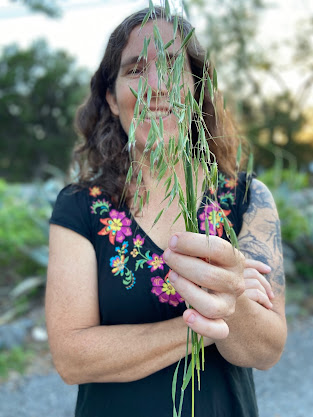
This. is. me + wild oats harvested in 2021. It was one of the best oat years I've ever seen! (Thanks to the snowpacalyse)

Oats - Avena sativa
Harvest the immature "milky oat" seed pods for a powerful calming herbal medicine. The entire above ground parts make a sweet & nourishing tea.


Thursday, January 13, 2022

Foraging is a Family Thing

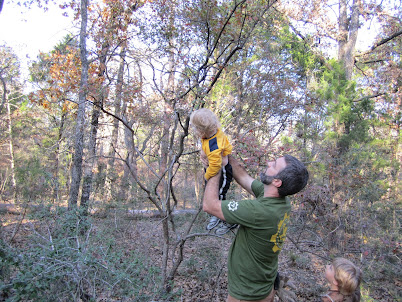
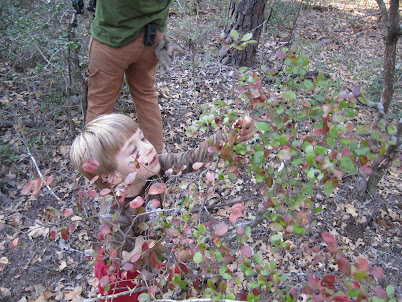
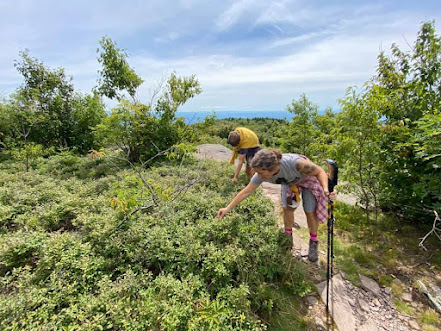
 I've spent a lot of time digging through old photos lately. Found these gems of us picking sparkleberries in the pines east of Austin several years ago. Now that my boys are teenagers, it's hard to remember these days when they were so little. And it's not always easy to remember them as foragers as they speed through their teen years full of sports and screen time and school stuff. Then again, a few recent photos show their wilderness skills are still intact! Joe Henry paddles with his fishing friends almost every weekend on our beatiful Hill Country rivers. Garner reminds me when the blackberries are ripe every spring! 

Chris gives Garner a lift into the berry-filled canopy circa 2010

Check out the loaded bush, perfect for Joe Henry! This was a foraging adventure we had about twelve years ago!

Fast forward 12 years:

15yo Joe Henry eats wild blueberries with me in the Catskills of New York

13yo Garner reaches for a wild strawberry hanging off a cliff in the Ozarks

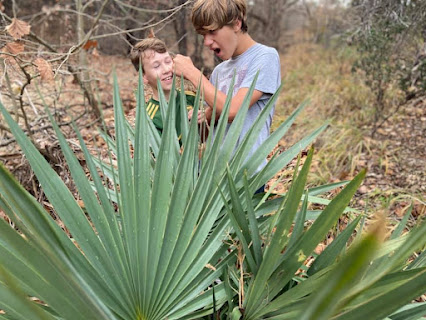
Staged sibling gesture on one of our hikes...featuring the dwarf palmetto (most delicious berries!)

Joe Henry has developed a deep passion for fishing. Check his instagram @kingfisher_____


Monday, December 20, 2021

Chickweed

* About ten years ago, I wrote a book highlighting the most common and abundant wild edible plants of Texas and then placed it on the backburner as I focused on other projects. It hasn't been published yet, but I do publish pieces of it here and there on my blog. I've recently considered packaging it for publication and might get around to it soon. So, as you read through my blog, you may note that some of the writing is more formal and sounds like a guidebook. As I move this project back into the forefront, I want to re-focus the writing on my own personal experiences with these plants and the land, water, and people supporting and nurturing them. Over the last ten years, my love for the Texas Hill Country has deepened, and my relationship with the plants has expanded. Living with the land, foraging, gardening, hiking, swimming, and growing older and wiser has inspired me to reconsider everything I wrote ten years ago. I am pleased to see that the information is still relevant and accurate, but there is a need for more conservation and preservation language. I've seen the Texas Hill Country explode with extensive, unchecked development, presenting a more urgent need for conservation. As foragers and herbalists, we are always concerned about protecting individual plants or patches of good food and medicine. However, the need to protect entire parcels of land and waterways is imperative. I hope to expand my book to include landscape-scale considerations so stay tuned and enjoy your adventures! 


Stellaria media

Eat the leaves, stems and flowers raw in salads, sandwiches, or as a garnish. Watch for this potherb to emerge very soon here in the Texas Hill Country!


Named for the farmyard animal that adores it, chickweed is a delicacy in more circles than poultry. A perfect substitute for lettuce with its mild, sweet taste, chickweed is also rich in iron, zinc and potassium.


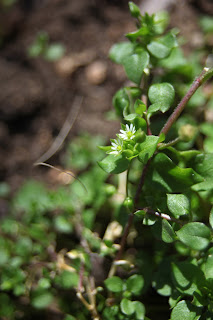
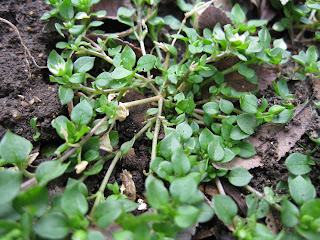
Chickweed is delicate and unassuming as it creeps and flows along the ground. Its thin, succulent stems radiate out of a basal center and flop over, causing the plant to look like a matt or tightly woven patch on the ground. A line of tiny, white hairs along the stem help distinguish chickweed from other similar, though non-edible plants such as scarlet pimpernel.  The leave of this annual herb are small, succulent, and have smooth, though ruffled-looking edges and come to a distinct point at the tip.


Chickweed can be harvested by snapping off the tips of the plants or snipping with scissors or clippers. If the plant has spread far and wide over the soil surface, gather all the flowing stems into your fist and snip the whole bunch off. If some leaves are left on the plant, the chickweed will continue to grow and provide more delicious greens for your salads or stir-fries. Allow it to flower and spread seed for future seasons. Chickweed, like most wild greens, will benefit from hydro-cooling before storing. Chickweed will keep in a plastic bag or vegetable crisper for a day or two.


Monday, October 18, 2021

Spicebush (My Blog Still Exists?!)


 Lindera benzoin

Wow, blogger still exists! I LOVE that I can still post on my BLOG. (Is blogging still a thing?!) I'm alive and well! Gardening, foraging, herbcrafting, and hanging with the plants. My littles (sometimes featured on this blog) are now 12 and 15! 

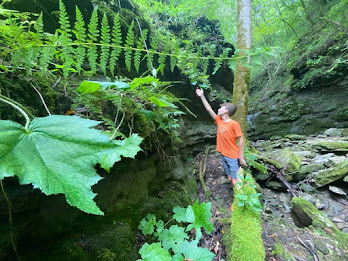
I was lucky to spend time with some beautiful plant-friends in a collapsed grotto near the Pedernales River this past weekend. Helloooo Spicebush and Maidenhair fern! SO GRATEFUL for our precious Hill Country and all it has to offer. Thanks to Ginger Webb and her Sacred Journey School for calling me out of my introvert-Hill Country-Luddite-life and back into a community of plant people.


Tuesday, April 22, 2014

Mulberries

*I know, things have been quiet on the blog-front. But that only reflects how busy we are foraging, farming and spending lots of time outside! Blue Bramble Farm is expanding and we are doing plenty of workshops for individuals and groups these days. Still loving this work!


Mulberry, Morus species
Eat ripe mulberries fresh or cooked in a variety of dishes.

In a good, rainy year, collecting buckets full of mulberries for smoothies and pancakes is easy and can be done in record time. But before collecting, be sure the berries taste good. Like all plants, wild berries reflect their growing environment and vary in taste and sweetness based on the soil type, moisture levels, weather and other factors that influence their growth. Some berries won’t be as sweet as others but all are high in Vitamin C and essential minerals.

Mulberry trees are small to medium-sized and can grow over 50 feet tall though they sometimes resemble a large bush. In Texas, the most common mulberries include the Red Mulberry (Morus rubra) which is usually found in deeper soil, and the Texas Mulberry (Morus microphylla), commonly found in the western half of the state. Both have edible fruit that ripens to a dark, purplish-black color and resembles long, thin blackberries. The White Mulberry (Morus alba) is not native to Texas but does occur in our state and has varieties that ripen to white, red or purple. Also, the paper mulberry (Broussonetia papyrifera) is a distant relative and does not have edible fruit.

Mulberry leaves alternate along the stems and appear highly variable from tree to tree or even on leaves from the same tree. They are generally shiny on the top and are heart-shaped, ovate or lobed like mittens with serrated edges.

Mulberries are easy to harvest by simply plucking the ripe berries from the tree. They ripen randomly over several weeks from April to early June. Mulberries can be eaten fresh, even with the tiny green stem attached, or they can be frozen for later use. Like most berries, mulberries can be used to create delicious smoothies, sauces, pies, jams, juices and mixed drinks. They will remain fresh for a couple of days in the refrigerator or can be frozen for up to a year.


Mulberry Sorbet
Makes approximately 1 ½ cups sorbet
A little bit of mulberry sorbet on a hot Texas afternoon is perfectly sweet and refreshing!

3 c ripe mulberries
Juice of 1 lemon
1 c simple syrup (1 c. sugar and 1 c. water boiled for a few minutes, then cooled)

Prepare the syrup by adding 1 cup of sugar and 1 cup of water to a saucepan. Bring to a boil, stirring frequently until the sugar dissolves. Remove from heat and let cool. Puree the mulberries and lemon juice in a blender or food processor. Stir in syrup and pour into a metal pan and freeze. When mixture is frozen, remove from pan and blend in food processor or blender. Scoop into airtight dish and refreeze. Serve with a few ripe mulberries sprinkled on top.

Monday, December 9, 2013

Dandelion Greens


Taraxacum officinale greens
Winter is the best time to eat dandelion greens here in Central Texas. They tend to be slightly less bitter in the colder months and are great additions to stews, soups or rice dishes. We are definitely living in the age of raw greens and juicing and dandelions are plentiful enough to add to your smoothies and meals everyday. But remember that many of our wild edible greens were traditionally cooked, and that can help remove some of the bitterness to make them more palatable. Either way, dandelions are packed with essential vitamins and minerals and can easily become a part of your daily diet. Remember too that wild greens are nutrient-dense; you can eat (or drink!) less than cultivated greens and get the same benefits!

Tuesday, August 27, 2013

Elderberry Harvest


After a long paddle down the San Marcos River and only a few yellow jacket stings to deter us, we were happy with our elderberry harvest... oh, and a day on the river was nice too! 

It was easy to harvest the umbels from our canoe. Most of them were found dangling over the water on the streambanks.
My helper picking the berries off to be cleaned


Tuesday, July 16, 2013

Texas Persimmons are Ripening!

Here's another excerpt from a guide I am writing:

Diospyros texana


Texas Persimmon, Diospyros texana
Eat the black ripe fruit raw or use the pulp in wine, breads, pies, jams, sauces and puddings. Be sure to get all the pulp off around the seeds, but don’t eat them!

Some places in South, West and Central Texas are blessed with Texas persimmon thickets so productive that one can pick gallons full of ripe fruit off of one tree in mid-summer. Eating a perfectly ripe Texas persimmon is as wonderful as indulging in a berry patch. In Texas’ version of Eden, Eve probably would have been tempted by this luscious fruit. Then again, the risk of encountering poison ivy or a snake is low since the persimmons are usually and conveniently picked right around eye level – just be sure you have your boots on.

Texas persimmons are slow-growing, multi-trunked trees with a semi-evergreen habit. Their light grey bark is smooth and sloughs off in large flakes as the tree ages. When the tree has received moisture at the right times during the year, the black-colored ripe persimmons can be as large as golf balls though they are more commonly the size of large marbles. Either way, their taste is something like a prune, but less tart and more sugary making it one of the best tasting wild fruits in Texas.

Ripe persimmons will look plump, round and smooth and can easily be pulled from their limbs. Squeeze the inner pulp out of the skin and into your mouth for a lovely treat on a hot summer afternoon. Once you’ve sucked all the pulpy sweetness off the seeds, spit them out and eat another. You’ll need to indulge in several to feel full. Then, pick as many as you can for your recipes. When you arrive back in your kitchen, wash and dry them – they will store in the refrigerator for a couple of days or freeze them for several months. Most recipes using persimmons will call for persimmon pulp - about 4 cups of Texas persimmons will make 1 cup of pulp. Since Texas persimmons are small, you’ll want to make every effort at pulping count. After you’ve removed the stem end or calyx, use a cone sieve or food mill for best results and employ a rubber spatula to scrape the sides every once in awhile. Once you’ve collected as much pulp as possible, there will still be quite a bit of pulp stuck to the seeds and the sides of your sieve. Run a rubber spatula down the sides of the sieve, and then clean the seeds off in your mouth to get that final bit of goodness. You can also throw the entire pulpy fruit blob in a saucepan, add some water and make it into persimmon juice for jelly.

Thursday, June 20, 2013

Wild Edible Plant Walks + Consultations

I've had a lot of requests lately for classes and want to let you all know that I am available for individual consultations on your land or for your group. I've worked with all sorts of folks and am willing to customize my classes to fit your needs. I've done workshops and consultations for boy and girl scout troops, pre-schools, chefs, homeschool groups, churches, retail nurseries, nonprofits, farmers and many others interested in learning more about the wild edible plants of Texas. Contact me at EatWild@gmail.com if you're interested in organizing something for your group!

Friday, May 10, 2013

Prickly Pear Flowers

Did you know you can eat them?
Simply pluck the petals (leaving the center to turn into a fruit) and eat them raw or cooked. They looked and taste amazing on a sandwich or in a salad!

Sunday, April 21, 2013

Spring?


We've had so some strange weather lately, but I do think it is finally spring. But a late spring means a short spring so keep you're eyes out for young, tender prickly pear pads, spiderwort leaves and flowers, wild onions and young plantain leaves -- their appearance will be brief though delicious!

Plantago lanceolata


My farm fields are full of Plantago lanceolata right now. I am harvesting it most days and throwing the greens into my kid's smoothies. Here's a bit from my guide on Plantago spp. and ways to eat it:


Plantain, Plantago species
Eat the leaves raw or cooked.

When Europeans arrived in the new world, they carried some of their most valuable potherb seeds with them. Potherbs, or any plant whose leaves, stems or flowers are used in cooking, quickly established in the new world and naturalized or adapted to survive in the wild. Many of these hardy potherbs were highly valued for their medicinal and nutritious qualities and were staples on the tables of early settlers. These days, most people consider them weeds. But their edible utility and culinary potential hasn’t changed. Creativity in the kitchen can bring these potherbs back en vogue, and back to our tables.

Plantain is one potherb that thrives in urban and rural areas though it is virtually forgotten as a useful plant.  It is easy to distinguish from other common low-growers because its prominent leaf ribs run parallel to the margins or leaf edges, which may be smooth or have small teeth. Like shepherd’s purse, plantain leaves will also reveal a core fiber when pulled apart. The younger leaves will be smooth and tender while the older leaves might be thicker and slightly fuzzy. They are edible at any stage and are rich in Vitamin A and calcium. The tiny plantain seeds are also edible though harvesting and preparing them would be tedious work. However, they are a great source of fiber.

Plantain leaves will benefit from hydro-cooling and can be stored in the vegetable crisper for 3 to 4 days.

Warm Potherb Salad
Serves 4 to 6
Any wild green will work in this salad, though your best choices might be dandelion, plantain, chickweed, dock, mallow, wild spinach, wild mustard and amaranth.

½ lb. wild greens
1 Tbsp. olive oil
2 Tbsp. red wine vinegar
4 strips bacon
2 slices French bread, cubed
1 hard boiled egg, crumbled
½ tsp. salt
black pepper to taste

Chop or tear the greens into bite-sized pieces. Toss the greens in a salad bowl with the oil and 1 tablespoon of vinegar. Fry the bacon and toss the bread in halfway through cooking. Add the bread and crumble the bacon and egg on top of the greens. Serve warm.

Monday, March 11, 2013

Wild Plum Blossoms

Hog Plum (Prunus rivularis)
Now is a great time to find out where the wild plums are located! Look for their blossoms, or new leaves. They are one of the first trees to leaf out in the spring here in Central Texas and they have gorgeous white blossoms (that appear before the leaves!) We have a few wild plum trees behind our guest house and two are flowering right now; one has already leafed out. Keep an eye on these trees and watch for ripe plums towards the end of the summer! Wild plums can be very tart but make really great jams, pies and sauces.


Wednesday, January 23, 2013

Upcoming Workshops!


wild edible bouquet


I will be offering at least two wild edible plant classes in February. I will do an overview of some common wild edible plants of Texas and their economic and nutritional value at the Texas Organic Farmers and Gardeners conference and I will also do a wild edible plant walk out at my farm in Wimberley. See the details below and email me if you'd like to register for the class at my farm!

What: Wild Edible Plant Walk - Learn how to identify, harvest and prepare some of the most common wild edible plants in Central Texas.

Date & Time: Saturday, February 23rd  1p-3p

Cost: $40 per person includes handouts and some wild edible snacks

Location: Wimberley, Texas

To register: Email  EatWild@gmail.com


Friday, January 4, 2013

Evergreen Sumac


Evergreen Sumac (Rhus virens)


We spent the end of 2012 and beginning of 2013 in West Texas camping and exploring the Big Bend area. The desert is amazingly beautiful and quiet. I am always impressed by the colors, the canyons and the oases along the Rio Grande River. There were plenty of winter berries and even some lingering prickly pear fruits to partake of. Everywhere we looked in the Chisos Basin, evergreen sumac berries were perfectly red ripe. The tiny, hard berries are a delight to taste - simply pop them in your mouth and suck off the bit of tart pulp around the hard seed. It's a good way to get your Vitamin C in the mountains (but be sure to spit out the hard seed.) You can also make a lovely tart drink called Sumac-aide ( because it resembles lemonade or kool-aid) by soaking a handful of berries in 2 cups of warm water overnight. Strain out the berries the next day, add a bit of sweetener and enjoy!

Wednesday, November 21, 2012

Farkleberry


Vaccinium arboreum


I spent my last Saturday teaching some boy scouts about the wild edibles in the Piney Woods. We found several species to discuss including one of my favorite wild edibles, farkleberries. These wild blueberries also known as sparkleberries are native to the Southeastern United States and stretch into our area, just east of Austin. The berries are usually small, but can be found in abundance growing in the understory or on the edge of the forest. The trees or large shrubs are small, deciduous and multi-trunking with spindly limbs. The leaves turn a brilliant red, burgundy and deep purple in the fall. The berries are usually not as plump and juicy as cultivated blueberries, but are just as sweet and nutritious!


Wednesday, October 17, 2012

Wild Greens


Clockwise from bottom left: Dandelion, Mallow, Spiderwort, Wood sorrel 

I've noticed several wild greens sprouting after the little bit of rain we got here in Central Texas. Since we have such mild winters here in the South, we can find plenty of greens to eat throughout the season. Greens are so important in our diet and 'grazing on greens' as we go about our business is quite popular these days. When you're out on a walk, picking through your garden or simply relaxing in your yard, keep an eye out for these tasty, nutritious treats:

Dandelion greens (Taraxacum officinale): Though often bitter, the greens help with digestion and cleanse the body. Eat them raw or cooked.

Mallow (Malva neglecta): This less popular, though wonderfully tasty green are a fabulous base for a salad since they are sturdy, slightly crunchy and mild-tasting.

Spiderwort, Flowering


Spiderwort ( Tradescantia spp.): Most people would recognize spiderwort by its flowers, but the young leaves are actually edible and deliciously mild and crunchy.

Wood sorrel or oxalis (Oxalis spp.): Wood sorrel is one of the most ubiquitous and popular wild greens. Its heart-shaped leaflets give it away and its distinct lemony, tart flavor is a treat as a garnish or mixed into a salad.

Tuesday, September 11, 2012

Preparing the Prickly Pear Tunas


We had a wonderful Saturday preparing a wild food dinner for our friends out at our place. I pulled several bags of agaritas, Texas persimmons and elderberries out of the freezer to create a lovely menu for a perfect fall evening. Check out the upcoming Edible Austin COOKS for a rundown on the menu and the event.


Thursday, August 16, 2012

Texas Persimmons + Tunas


I harvested Texas persimmons and prickly pear fruits this past weekend in Hondo, Texas. Looks like it's time for a (prickly pear) margarita party. My Mexican limes are just about ripe and ready on my tree as well - perfect timing! I'll probably just pulp the persimmons in my hand-cranked food mill and use the pulp as a spread on toast, biscuits and crackers.