 |
| Turk's Cap Flowers |
Turk's Cap Flowers and Mexican
Apples, Malvaviscus arboreus var. drummondii
Eat the leaves, flowers and
fruit raw or cooked.
The Mexican apple is more commonly
known as Turk’s cap but that name, while appropriately describing the shape of
the flower, does little justice to its edible qualities. The Mexican apple
plant is one of the few multi-season wild edibles that gives us Texans
something to nibble nearly every month of the year.
The Mexican apple is a low-growing
perennial shrub that typically grows in shaded woodlands and spreads easily and
quickly by underground runners. It is also a very common landscape plant and is
one of the easiest wild edibles to transplant into your own yard. The opposite,
thick leaves often look like baseball mits and are the size of the average palm
on a hand. The tiny red flowers on
top of the plant do look like Turk’s caps that eventually turn into tiny, red
apple-like fruits. It can be found growing wild and in landscapes throughout
Texas.
Beginning in late winter, the
tender young leaves sprout from the perennial roots, giving us some greens for
salads or cooking. As the weather heats up and the plants get bigger, the
leaves quickly loose their tenderness, become a little fuzzy and are better
cooked or used for dolmas. Harvest the beautiful, red flowers in late spring
and summer to adorn your salads. But remember to leave some blooms to the bees
so that the plant will produce the sugary, cucumber-tasting Mexican apples in
the fall.
Turks cap leaves should be washed
and hydro-cooled and can be stored for a couple of days fresh. They can also be
preserved like grape leaves. The flowers are extremely perishable and should be
plucked just before they are served fresh. You can also dry the flowers and
make a hibiscus-like tea out of them – the Mexican apple plant is related to
hibiscus. Whether they are the size of marbles or pinballs, Mexican apples
shrivel quickly due to their low water content and should be eaten or processed
soon after harvest.
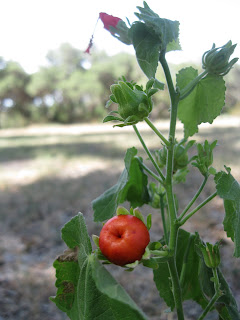 |
| Mexican Apple or Turk's Cap Fruit |
Mexican Apple Agua Fresca
Makes 2 cups agua fresca
The amber color of this juice
may trick folks into believing it is actually apple juice or Texas tea. But the
earthy, cucumber-sweet flavor will be a pleasant, unique surprise. Serve with a
few Turk’s cap flower petals floating in each glass for an added wild edible
experience. And don’t forget that some juices are meant to be spiked! Add some
tequila and you’ll have a delicious cocktail on the rocks.
1/2 c ripe Mexican apples
½ c dried Turk’s cap flowers
2 c water
¼ c sugar (you can adjust sweetener
amount and type based on your own taste)
Wash the fruit and place in a
saucepan with the flowers, water and sugar. Simmer approximately 15 to 20
minutes until the fruit softens. Crush the fruit with the back of a large spoon
or a masher. Strain the liquid through several layers of cheesecloth and gently
squeeze out all the juices. Let it cool and serve over ice.


